

PARENTS FAQ
Fair Lawn Football & Cheer
New to Football or Cheer?
You are in the right place. Our coaches will teach players the fundamentals of the game,
including proper technique, positioning, rules and safety. No previous playing experience is
required. Players should arrive ready to learn, work hard and become part of the team.
Equipment List (Football)
The program supplies each football player with a helmet, shoulder pads and football pants. Families are responsible for providing the following:
- Mouthpiece, with a backup strongly recommended
- Black game socks
- Football cleats
- Water bottle
- Protective athletic cup
- Game jersey to keep: $75
- Practice jersey to keep: $25
- Padded football shirt to wear under the shoulder pads
Football gloves and forearm protectors are optional.
Hawk Tackling
We believe in keeping the head out of tackling to keep our players safe. Please watch this video on Hawk Tackling. Hawk Tackling is a rugby-inspired tackling method popularized by Seattle Seahawks head coach Pete Carroll that emphasizes shoulder leverage and keeping the head out of the tackle to reduce injury risk.
Core Principles
- Shoulder contact only. No head-on impact.
- Leverage. Use the shoulder to control and bring the ball carrier down.
- Head outside. Keep the head behind or to the side, not across the body.
- Tracking. Close with the near hip of the ball carrier, then near foot, maintaining good posture.
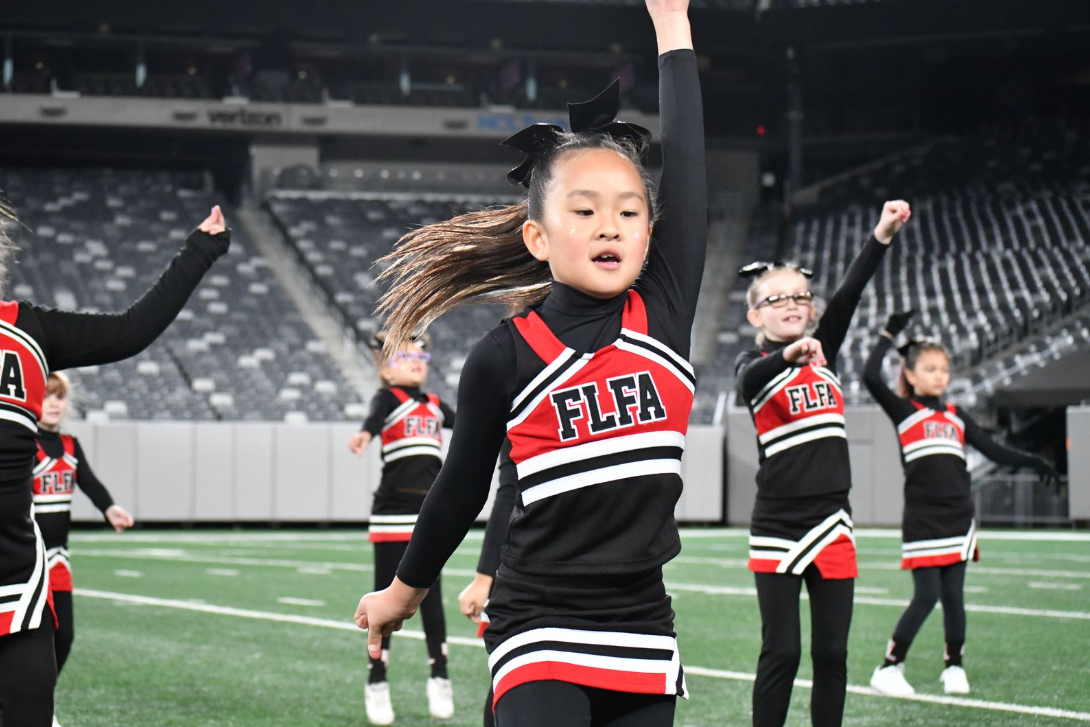
Spirit Gear (Cheer)
Mandatory Items — Limited Time Available in the Online Store
- Cheer bow
- Cheer sneakers
- Cheer socks
- Red cheer briefs
- Black midriff
- Black leggings
- Red fleece with athlete’s name
Optional Items
- Black headband/ear warmer
- Black gloves
- Cheer backpack
Practice & Game Day
Practice Wear
Please wear comfortable, fitted athletic clothing. Clothing cannot be baggy or oversized.
Game Day
- Uniforms will be provided by the association and must be handed back in at the end of each season.
- Girls should always pack enough water for games and practices.
Sideline Expectations & Sportsmanship
Sideline Expectations
Parents and spectators are encouraged to cheer enthusiastically for our teams while showing respect for opposing players, coaches, families and officials. Please keep all comments positive and allow the coaches to coach your child. Discuss questions or concerns privately with a coach at an appropriate time, never from the sideline or immediately after a game.
Sportsmanship
All football players and cheerleaders are expected to represent the program with pride and good sportsmanship. Participants must show respect for teammates, coaches, opposing teams and officials. Football players are expected to shake hands with their opponents after each game and handle both winning and losing with maturity.
Player Attendance & Expectations
Player Attendance
Football players and cheerleaders are expected to attend practices, games and scheduled team activities regularly. Parents should notify the appropriate coach whenever a participant will be absent or is home sick. Repeated or unexcused absences may result in reduced playing time or limited involvement in cheer routines.
Player Expectations
Players are expected to pay attention, follow instructions and give their best effort at every practice and game. They should be good teammates, study their plays or routines, maintain their physical fitness and avoid behavior that distracts others. Every participant is responsible for helping create a positive, focused and supportive team environment.
Hydration & Warm-up
Hydration
Players should begin hydrating well before practices and games and bring a clearly labeled water bottle to every team activity. Anyone who feels dizzy, weak, nauseated, unusually tired or otherwise affected by the heat must stop participating and notify a coach immediately.
Stretching/Warm-up
Coaches will lead players through appropriate warm-ups and stretching at practices and games. Light stretching and mobility work at home are also encouraged, especially before leaving for practice. Players should never attempt a new or painful stretch without guidance from a coach, trainer or qualified healthcare professional.
Concussion Awareness
Concussion Awareness
A concussion is a type of traumatic brain injury and may occur even when an athlete does not lose consciousness. Possible symptoms include headache, dizziness, nausea, balance problems, sensitivity to light or noise, confusion, memory difficulty and feeling foggy or slowed down. Players must report symptoms immediately and should never attempt to “play through” a possible head injury. Parents and athletes can learn more through the CDC’s HEADS UP concussion resources.
Concussion Protocol
Any player suspected of having a concussion will be removed from participation immediately and may not return that day. The player must be evaluated by a qualified healthcare provider and follow all medical instructions. Before returning to football or cheer, the family must provide written medical clearance to the Head of Football. Return to participation should be gradual and supervised, following the CDC’s return-to-sports progression.
Heat Guidelines & Weather Policy
Heat Guidelines
Our coaches will take appropriate precautions during hot weather, including scheduled water breaks, reduced equipment when necessary, rest periods and adjustments to the length or intensity of practice. Players experiencing difficulty with the heat must stop, hydrate and notify a coach immediately. No player will be pressured to continue when showing signs of heat-related illness.
Weather Policy
The decision to play or practice in rain or snow is made at the discretion of the coaches and league officials, with participant safety always the top priority. Lightning or thunder will activate our weather safety protocol and require everyone to clear the field. Activities may resume only after the area has remained clear of lightning and thunder for at least 30 minutes.
Emergency Action Plan
Immediate Action Steps
- Stop play immediately.
- Ensure the scene is safe.
- Check the athlete’s responsiveness, breathing and pulse.
- Assign someone to call 911.
- Retrieve the AED and first aid kit.
- Begin appropriate care, including CPR, bleeding control, cooling or stabilization.
- Stay with the athlete until emergency medical services arrive.
Call 911 For:
- An unconscious athlete
- Chest pain or a suspected cardiac emergency
- Difficulty breathing
- A suspected head, neck or spinal injury
- Seizure activity
- Severe bleeding
- Heat stroke or collapse
- A severe allergic reaction or anaphylaxis
Information to Provide to EMS
When calling 911, be prepared to provide:
- The field location and best entrance for emergency access
- The athlete’s age and current condition
- The care already provided, such as CPR or use of an AED
- Your name and callback number
Key Medical Protocols
- Cardiac Arrest: Begin CPR and apply the AED immediately.
- Head, Neck or Spinal Injury: Do not move the athlete. Keep the head and neck stabilized until emergency medical personnel arrive.
- Heat Illness: Remove the athlete’s equipment and begin rapidly cooling the athlete.
- Severe Bleeding: Apply firm, direct pressure to the wound.
- Severe Allergic Reaction: Use an EpiPen if one is available and call 911.
Important Reminder
Coaches must have athlete medical forms and emergency contact information available at all practices and games.
Injury Reporting
Please use the Incident Report form to report injuries.
AED Location
An Automated External Defibrillator (AED) is a portable emergency device used to assist someone experiencing sudden cardiac arrest. It analyzes the person’s heart rhythm and, when necessary, delivers an electrical shock to help restore a normal rhythm. The device provides step-by-step voice instructions and should be used while someone calls 911 and emergency assistance is on the way.
The AED is located in the Field House hallway leading to the main conference room.